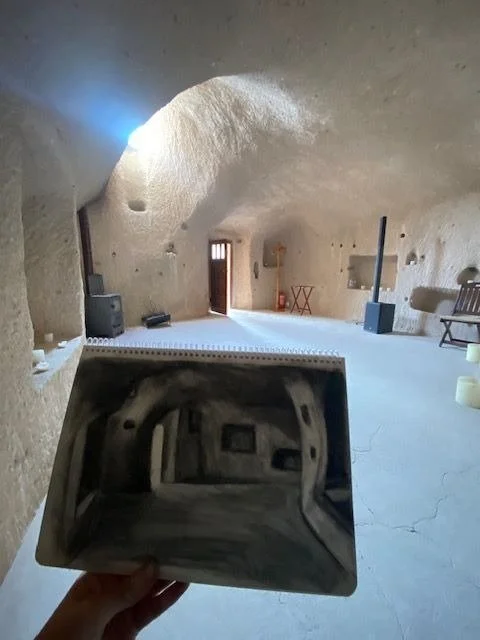
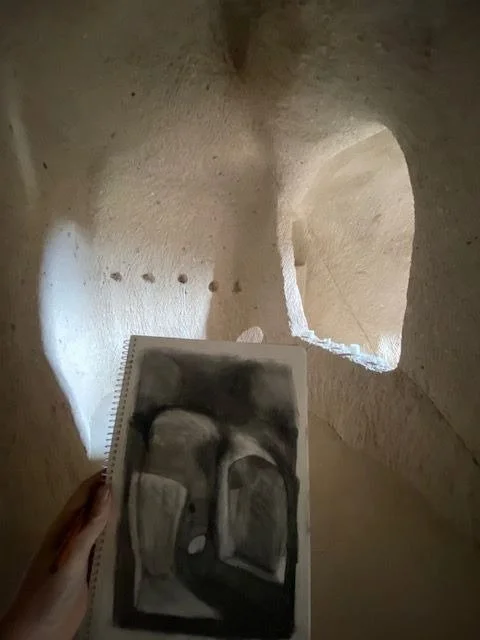
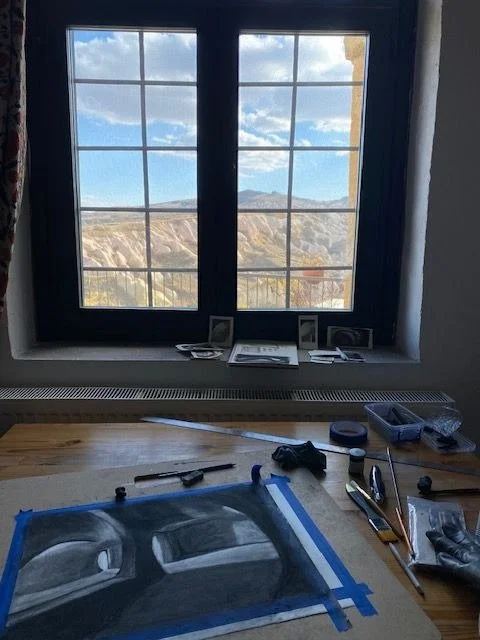
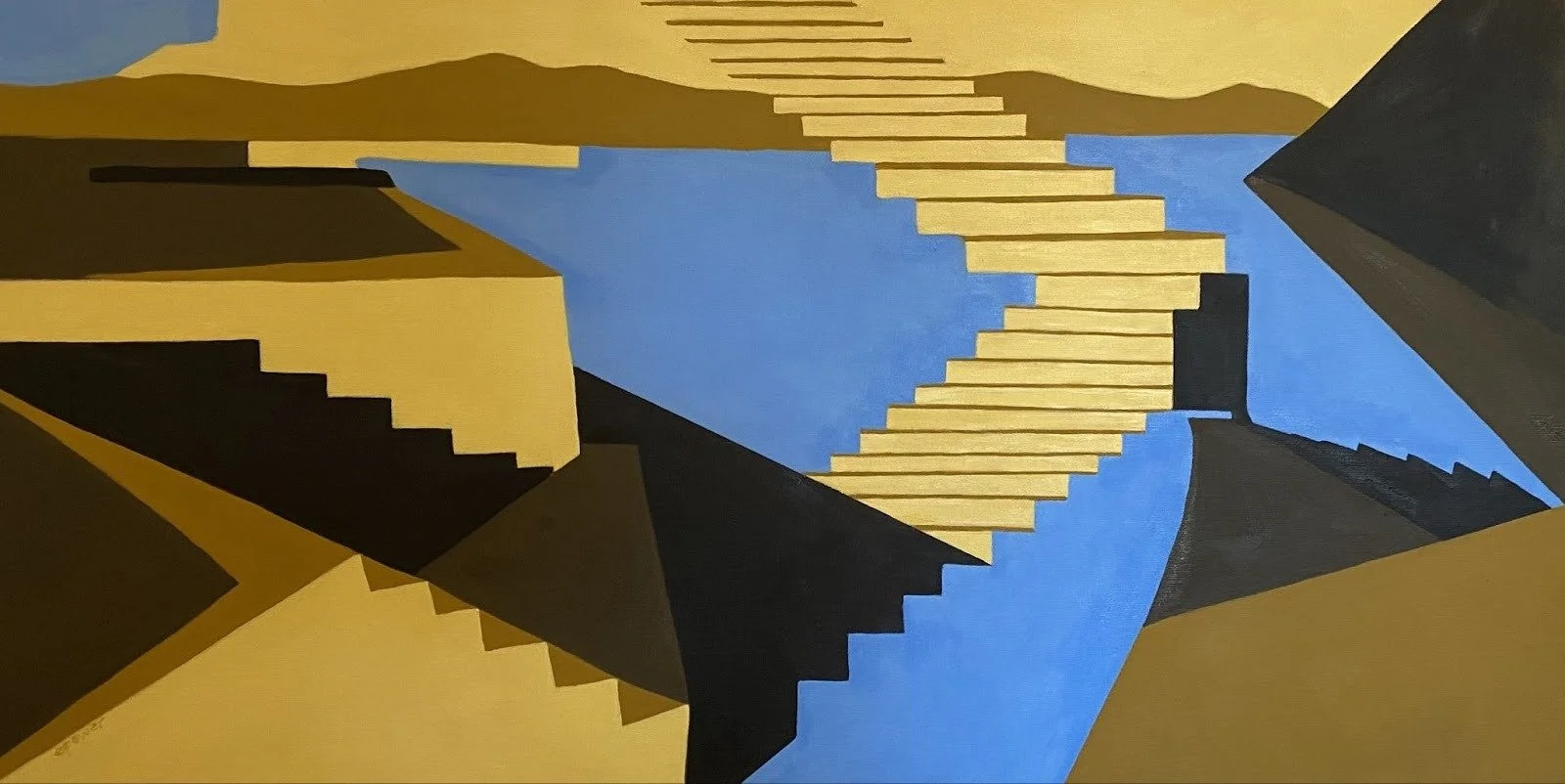
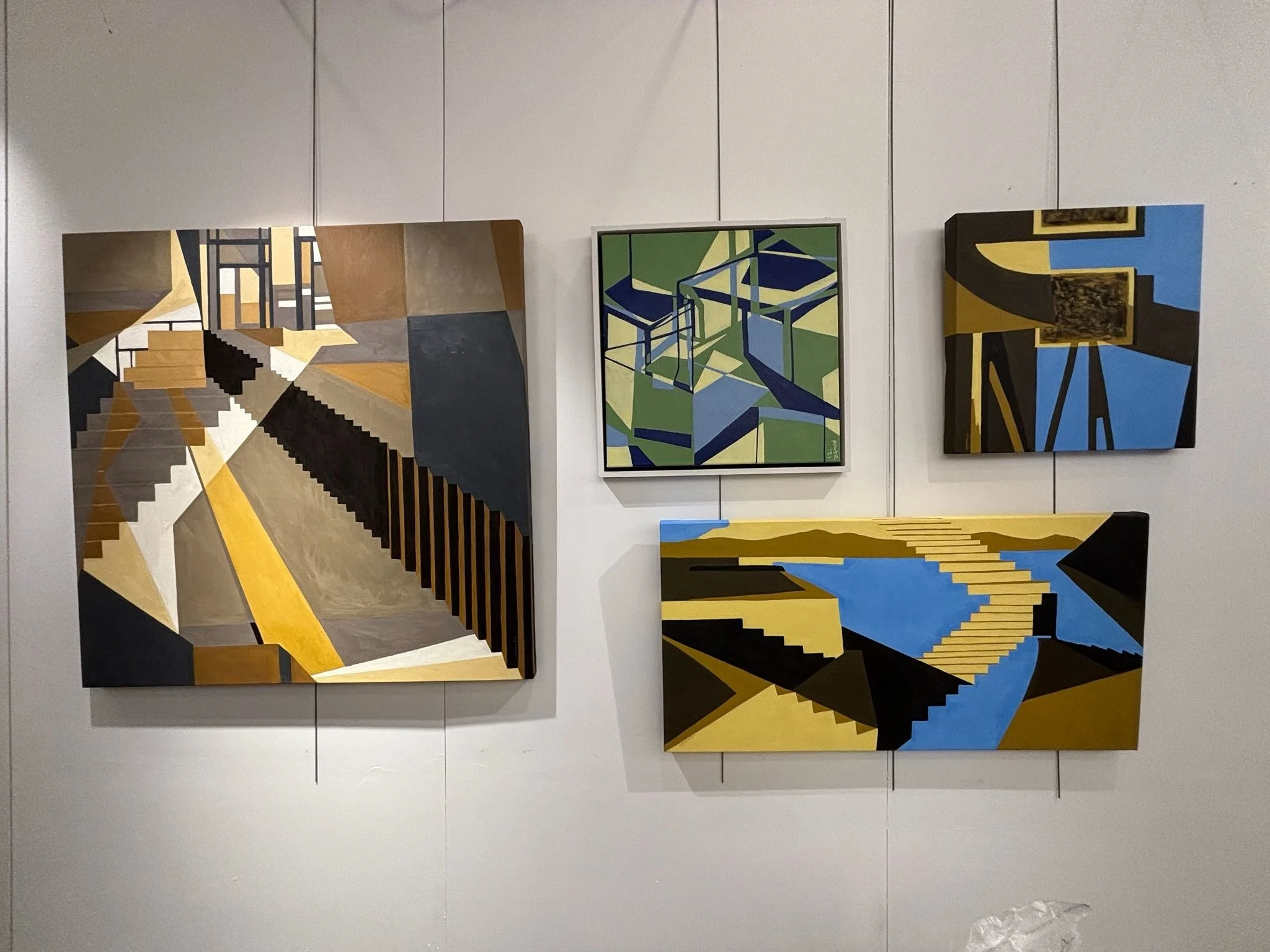
A year ago, in June 2025, I left the classroom after 20 years of teaching young people how to develop their artistic skills and, hopefully, supporting and inspiring their creativity and creative growth.
My career as a high school art teacher was incredibly rewarding. But after two decades of spending my creative energy helping other people make art, I wanted to find out what I could make when that energy was directed toward myself.
I wanted to know what kind of work I could make when artmaking wasn't squeezed into nights and weekends or carved out of whatever snippets of time remained after a full-time job. What would happen if I had the time to follow an idea further? To experiment? To make something that didn't work and then try again?
I also needed to get caught up with the art worlds of Istanbul and Seattle, two places I call home, and two places I had become somewhat estranged from during my six years in eastern Türkiye.
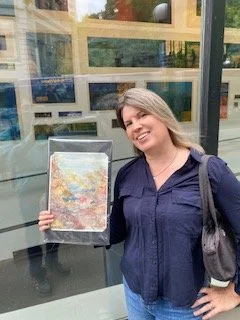
So I spent substantial time in both cities going to gallery openings, exhibitions, art fairs, museums, and art walks. I read books and articles, listened to podcasts, attended lectures, and talked to as many artists, curators, gallerists, and other people working in the arts as I could.
I was learning a completely different side of the art world: one outside of education and academia, where creativity and craft are paramount, not only to distinguish your work from that of other artists and creatives, but also from the overwhelming amount of visual and material detritus available for purchase in the mass market, and increasingly, from the wave of AI-generated imagery.
After a year of making, looking, researching, experimenting, and paying attention, I've learned a few things.
Some things I've learned
It takes an extreme amount of courage, confidence, and capital.
In order to produce high-quality, market-ready artwork that can command a price that recognizes the time and materials invested in it, I need to present the work in the best way possible. That means making it to the highest degree of craft I can, and presenting it as a finished object, often framed and ready to hang.
That means front-loading a lot of costs with no guarantee that anyone will ultimately purchase the work. You have to have enough faith in the work to make the investment before you know whether the investment will pay off.
Each sold painting needs to support the unsold paintings.
The cost of making art isn't just the cost of the painting that sells. It includes the paintings that don't sell, the experiments, the failed ideas, the framing, the materials sitting on the studio shelf, the application fees, the time spent researching and developing ideas.
The studio has to be supported by the work as a whole.
Not every painting will be excellent. Some will be shit.
I need to make the shit paintings to get to the excellent ones. It's a tax.
It's also part of how I break through to more innovative and interesting work. If I expect every painting to be successful, I'll inevitably become too cautious. I need the freedom to make bad work in order to discover something better.
Sometimes I have to keep making similar things until I'm bored with them.
Sometimes an idea needs to be worked over and over again before I understand what I'm actually trying to say.
It can feel like banging your head against a wall repeatedly—until suddenly, you break through.
The more I work, the more ideas I generate.
Sometimes I think I should prioritize certain ideas over others and determine which ones are "viable." But I've learned that the little side quests can be just as important as the ideas that seem most promising.
Sometimes following a seemingly minor tangent is exactly what reinvigorates the larger process.
Time is a luxury.
Having the time to explore and experiment leads to ideas that simply wouldn't emerge otherwise.
At the same time, time constraints can be incredibly productive. Deadlines force a level of productivity and creativity that might not happen without them.
So I don't think the answer is simply having unlimited time. It's learning how to use both spaciousness and constraint.
Following the rhizome
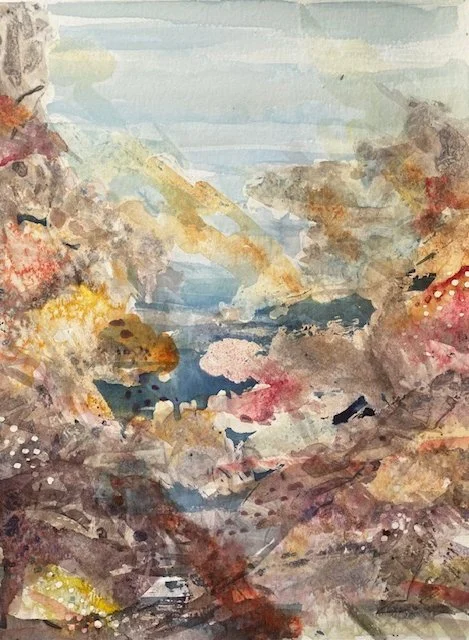
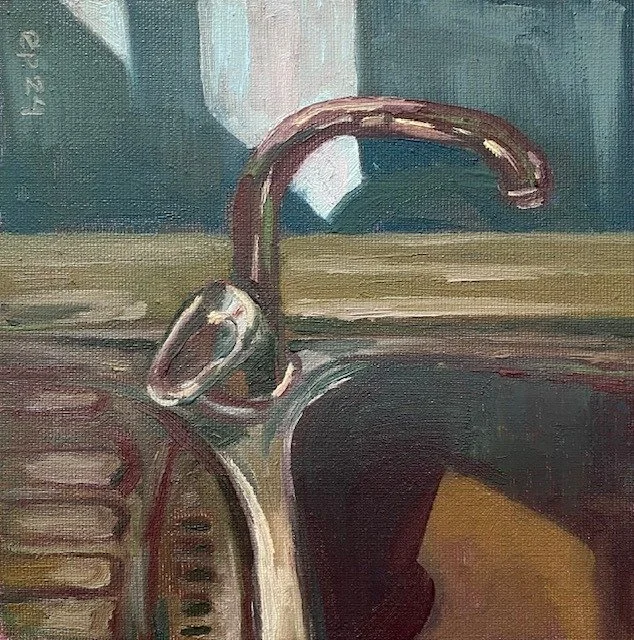
Through this year of focused attention, investigation, experimentation, and plenty of side quests, I've developed several bodies of work that may look quite different from one another on the surface.
But underneath, they are connected.
One of the things I’ve been thinking about is how very different paintings can grow out of the same underlying questions.
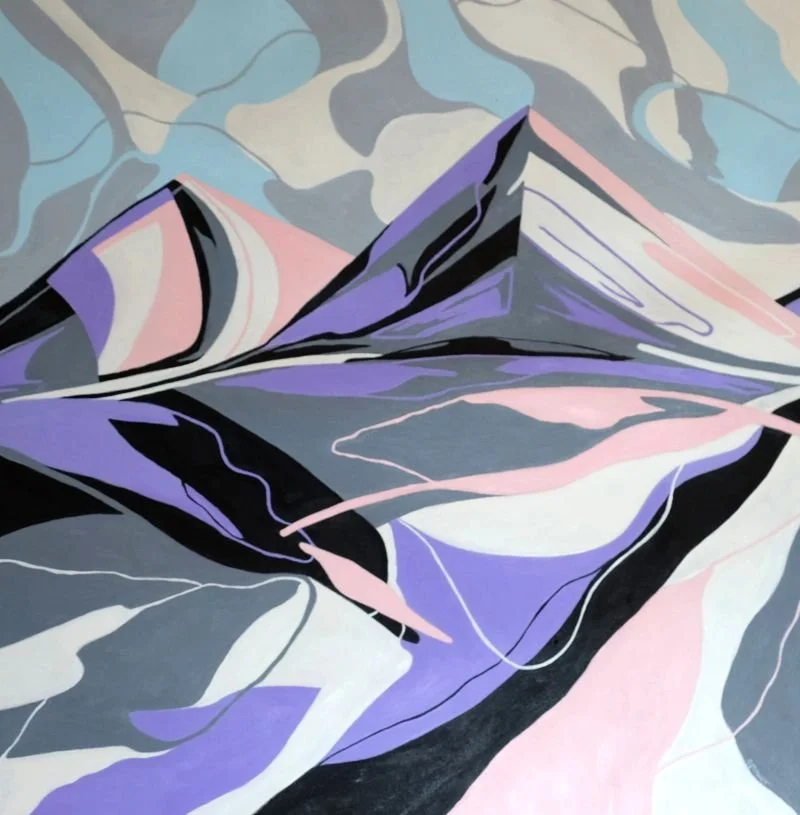
Threshold, 2026, 75x75cm, oil on canvas
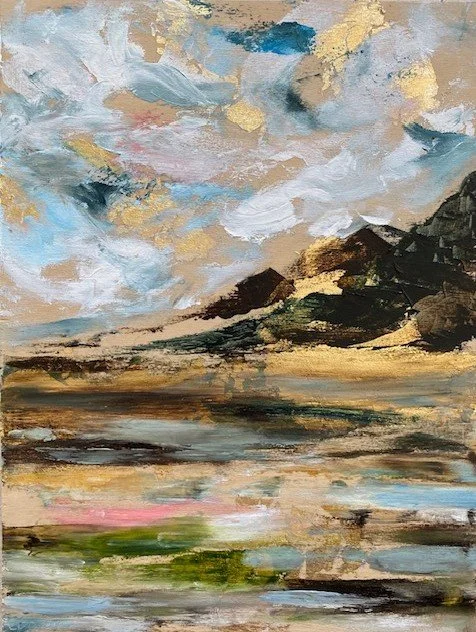
Where the Light Settles, 2026, 40x30x3cm, Oil and Dutch metal on wood panel
These two paintings approach the mountain landscape quite differently. They use different visual languages and take different paths, but both grew out of my ongoing interest in place, light, reflection, perception, and the traces of change over time.
I've been thinking about this through the idea of rhizomatic epistemology: a way of understanding knowledge in which ideas don't necessarily follow a linear path. Instead, they branch and multiply from a shared point of origin, much like the shoots of a ginger root growing from a central body.
This has become a useful way of thinking about my own studio practice. One painting leads to a question, which leads to another body of work, which leads somewhere else entirely. The results don't always look related, but they can often be traced back to the same underlying concerns.
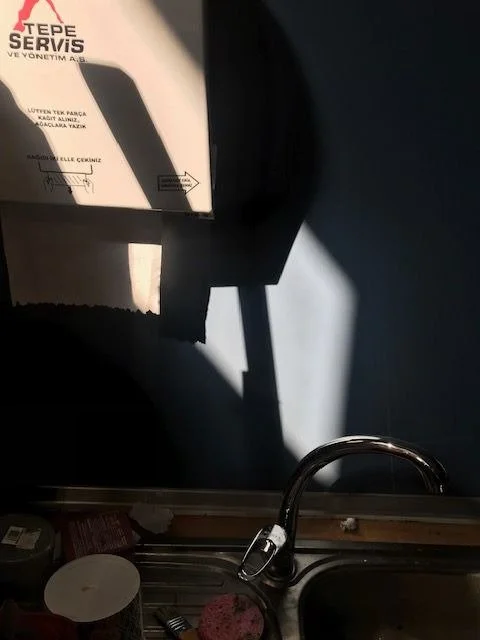
For me, those concerns include light, reflection, the built environment, human traces, and the ways places change over time.
The work branches out, but the roots remain connected.
And perhaps that is what this first year of working full-time as an artist has really been about: following those branches far enough to see where they lead.
As summer comes to an end and I begin making plans for the 2026/27 year, I'm excited to see where the work goes next.
I have several exhibitions coming up in the Seattle area, as well as in Istanbul and Bodrum, and I'll be sharing more details soon.